
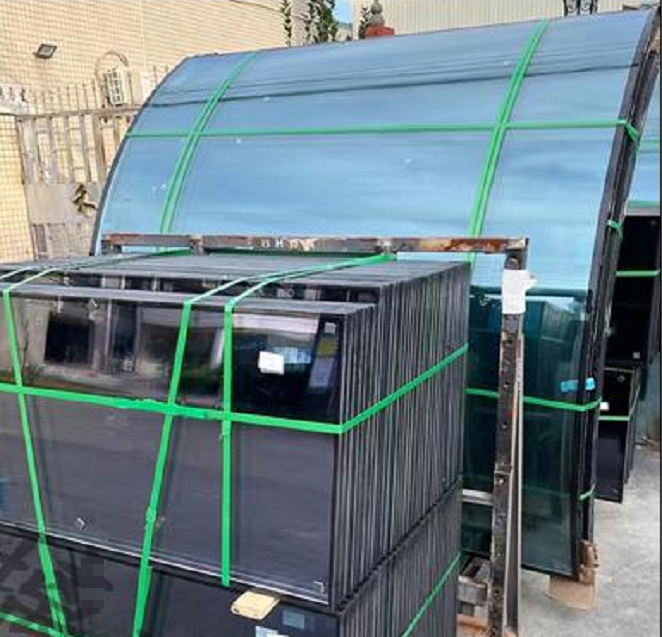
On the glass line, heat isn’t just a number on a chart—it’s control. When the heating profile starts to drift, you pay for it fast: uneven temper, optical distortion in bending, and adhesion that falls short in lamination. We built this infrared radiator to hold that profile steady, cycle after cycle, without eating your energy budget. The unit runs on near-infrared (NIR) quartz emitters, picked for quick response and tight spectral output. That means the glass heats fast, so you can keep pace with high-throughput tempering furnaces and lamination presses without waiting on convection to catch up. They come in standard voltages and a compact footprint, drop into common mounting setups, and wire into whatever control strategy you already use. Across the heating zone, the output stays predictable—fewer hot spots that push thermal stress, and fewer cold spots that drag the line down. Here’s what that looks like on the floor: fewer rejects from stress fractures and inconsistent curing, and changeovers between thicknesses that don’t eat your shift. Energy use drops because NIR heats the glass directly, not the air around it, and the faster cycle cuts idle power. Maintenance stays simple, too—quartz emitters hold up, and the modular layout lets you swap a section without shutting down the whole bank, so downtime stays short. Installation is straightforward, but alignment is where you earn it. Get the beam angle and distance to the glass right for your product mix, or you’ll see uneven heating across the sheet. Start with a documented baseline, then tune spacing and power until you hit the temperature uniformity you need. Once it’s set, the system settles in and keeps delivering repeatable heat where the process needs it.