


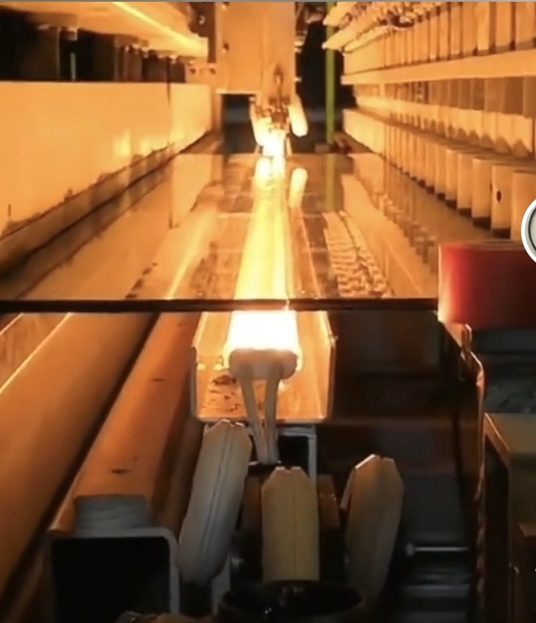
On the factory floor, heat isn’t just heat—it’s a dial you have to get right. Throw off temperature uniformity or miss the ramp rate, and a tempering run turns into scrap. Push the wrong profile in lamination, and you’re staring at delamination. That’s where electric infrared heaters earn their keep: they give you control where convection furnaces always seem to fall short. What matters under the hood We build these heaters around short-wave quartz emitters because they snap to temperature and pack serious power density. At the work surface, typical output lands at 40–60 kW/m², enough to drive fast glass heating without dumping heat into the frame. The system jumps from ambient to 680°C in under 12 seconds, which keeps up with high-throughput tempering lines. Across the heating zone, uniformity stays within ±5°C, so thermal stress and edge warp don’t creep in. It’s closed-loop control, with thermocouple feedback and power adjustable from 30% to 100%—handy for fine-tuning annealing, bending, and coating drying profiles. Why it plays well in glass In tempering, consistent heat input gives you repeatable surface compression. That means less optical distortion and more predictable break patterns. On the bending line, the heater hits sag temperature fast, then holds steady—repeatability improves shift after shift. In EVA and PVB lamination, short-wave energy penetrates the stack quickly, so cycle time comes down while bubble formation stays under control. Energy use drops, too, because the heater only runs when it’s needed, and the heat goes straight to the glass, not the oven walls. The details that make or break it Infrared is line-of-sight, so emitter layout and reflector geometry have to match the glass shape and conveyor pitch. Keep surfaces clean—coatings and dust change emissivity and can create hot spots. You get tighter control when the heater is matched to conveyor speed and when glass geometry stays stable. For the best fit, we size zones around your part mix and spec out guarding and interlocks to meet plant safety rules.