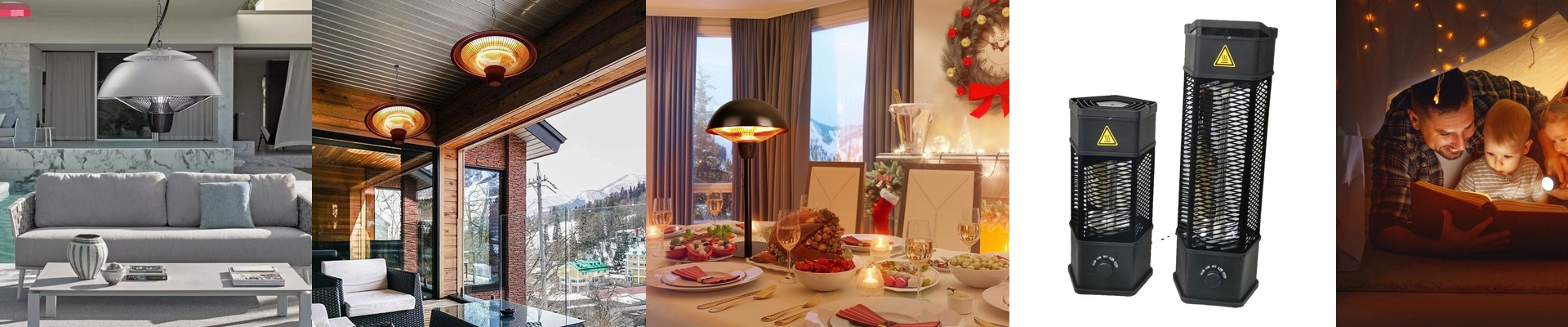
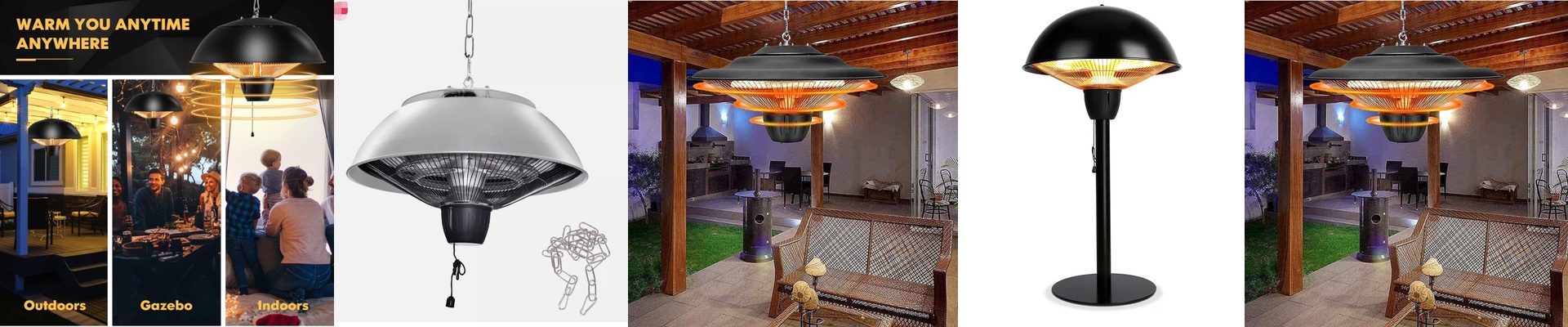
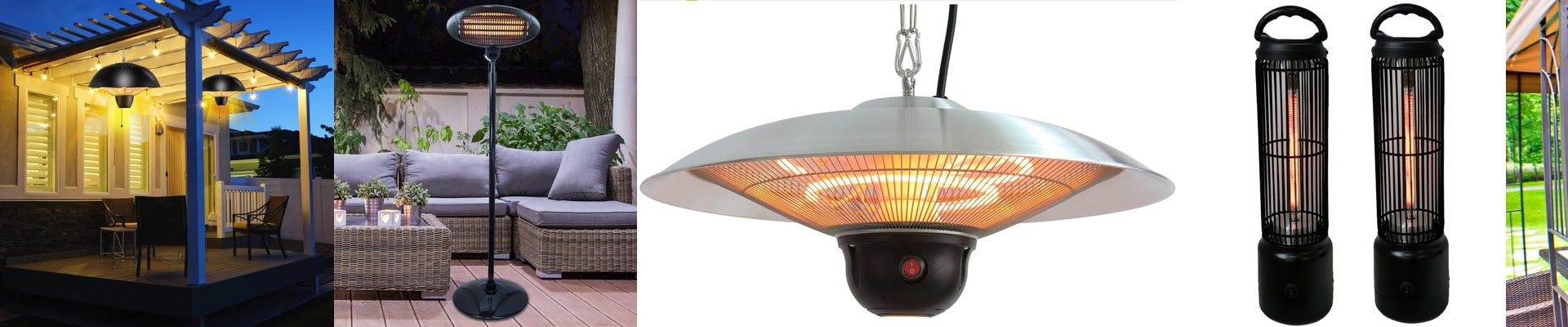
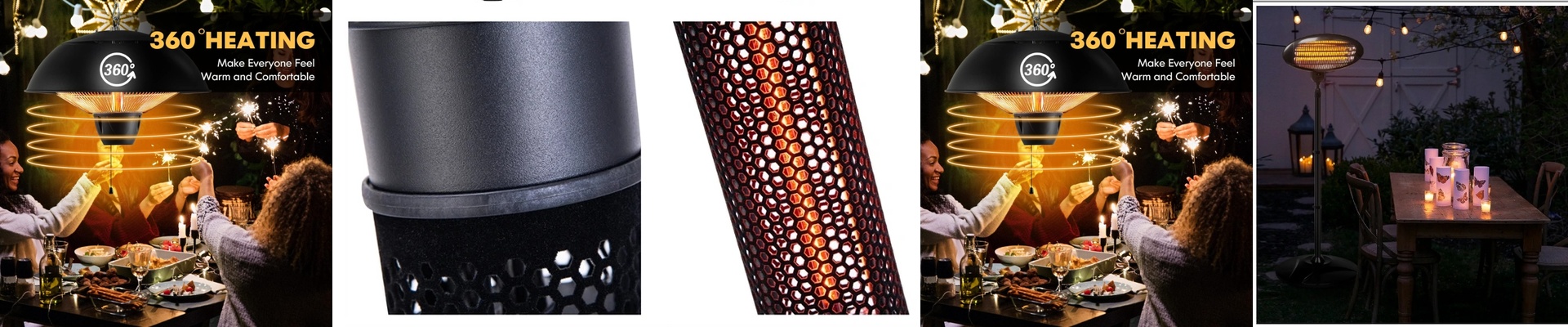
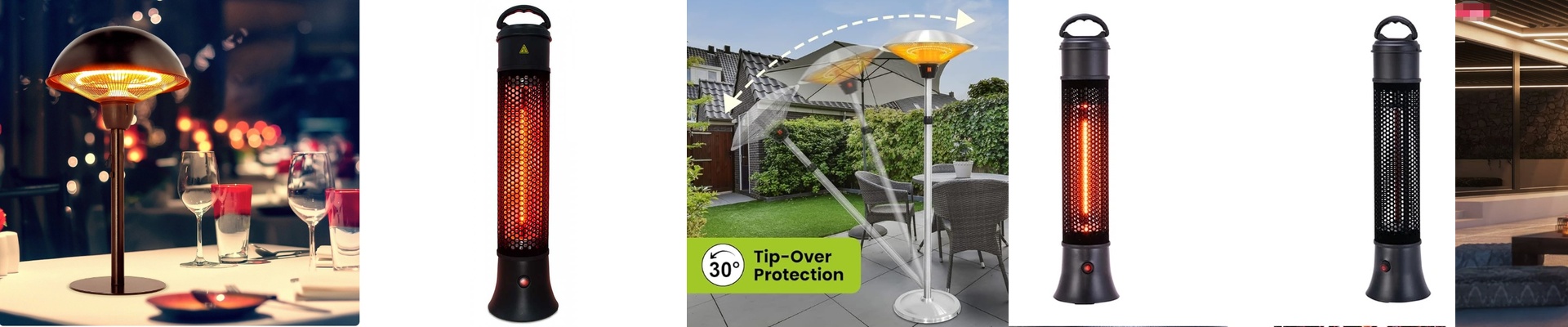
The instant you hit the switch, the bite drops out of the air. Infrared warmth hits like a steady pulse—no lag, no drafts—just immediate comfort across the patio. No tricks here. Just physics, applied cleanly.
What actually matters under the hood
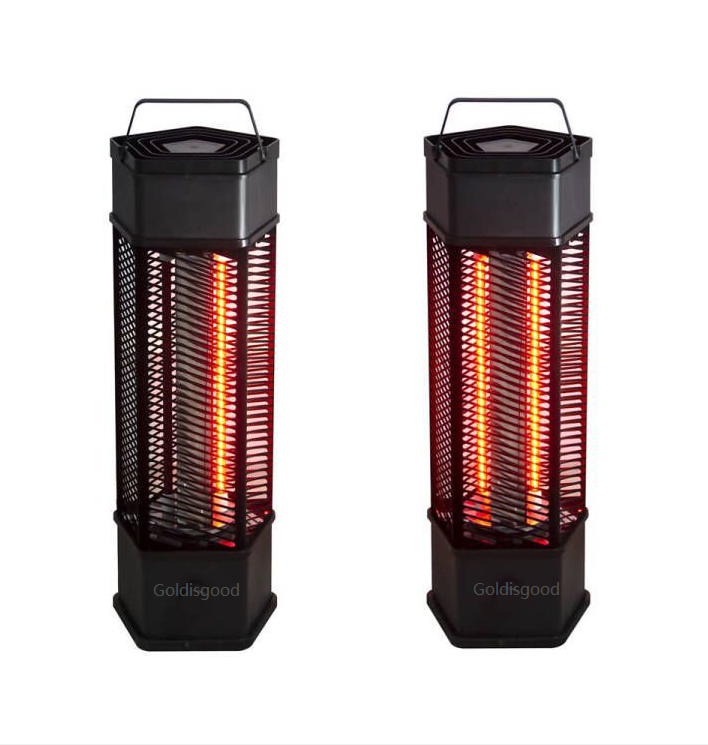
A dimmable patio heater built around infrared delivers radiant heat. It warms people and surfaces directly, instead of pushing air around and hoping for the best. Inside, you’ve got a high-efficiency emitter—usually a quartz tube or a carbon fiber element—throwing short- to medium-wave infrared outward. That energy travels and turns into heat the moment it makes contact. You feel the difference within seconds. Dimming control keeps output matched to the evening: full power when the crew shows up, then a quieter, lower setting for two. Look for a thermostat or power-level control that adjusts smoothly, plus a safety cut-off for overheat protection. For outdoor use, a solid IP rating means the electronics are protected from rain and dust.
Why this approach works outside
Evenings outdoors shift fast. Conventional heaters chase air that keeps slipping away; infrared goes straight to what matters—your body, your furniture, the whole vibe. You feel warmth faster, and because the heat is directional, you can place the unit right where you gather. Dimming lets you fine-tune comfort without switching the heater off and on, so conversation keeps rolling and energy use stays sensible. The comfort is steady, not blasting, which stretches patio time further through shoulder seasons.
The details that keep you out of trouble
Placement matters. Keep the heater 3–6 feet from people, and at least 3 feet from combustible materials—always follow the manual. Most electric models plug into a standard outlet, but a dedicated circuit is the smarter move for consistent performance. Infrared heats objects directly, so nearby surfaces warm up. That’s the point—and that’s also why clearances are part of safe operation. Clear leaves and debris from the area, and keep the unit upright using the provided stand or mounting. When the weather turns, cover it or store it to protect the emitter and controls.