Why Fast-Response Infrared Heaters Are the Right Tool for In-Line Glass Annealing
We build infrared heating systems for glass, and honestly, the whole point is simple: get the glass hot, fast. Keep it steady. Then move on. Because on an in-line annealing line, the belt doesn’t stop for a slow warm-up. The glass keeps rolling, and your heat has to keep up.
Power, Voltage, and Geometry—The Practical Stuff
It all starts with power density. We size these heaters to pack a punch in a small footprint, so the glass gets the energy it needs in the short time it has under the heat. We match voltage and wattage to what the process actually needs—not to make the specs look flashy. Running at higher voltage drops the current for the same wattage, which means thinner wiring and less voltage drop across long lines. That matters when you’ve got multiple zones strung together. Heater length is chosen to match the zone width. If the zone is narrow, the heater is short, so the heat stays focused where the glass actually passes—no wasted heat on nearby parts. If the zone is wider, we lengthen the heater to keep coverage even. Bottom line: the dimensions follow the line speed and the annealing curve.
Material & Design: Halogen, Quartz, and the Right Connection
We use halogen-filled, quartz-tube infrared heaters because they wake up fast. The filament heats almost instantly, and the output can be adjusted quickly enough to keep pace with line speed changes. The quartz tube handles high temperatures and gives you a clean, direct path for the heat. And the connector? Not an afterthought. An R7s base gives you a straightforward, industrial connection that’s easy to wire and repeat across the line. It’s practical, serviceable, and built to handle vibration and repeated heating and cooling. We also pick the coating on the quartz for stable emissivity, so output stays consistent over time. No surprises. No drift in the annealing curve as the heater ages.
Application & Benefits: In-Line Annealing and Continuous Production
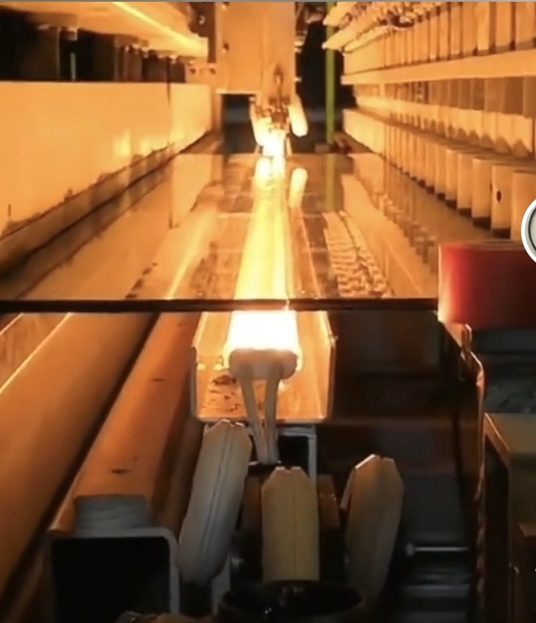
When you’re relieving stress in glass, you need controlled heat—enough to let the material relax without creating new thermal stress. Infrared delivers energy directly to the glass, with very little heat spilling onto surrounding fixtures. That helps keep the machine footprint tight. Fast response means the heater can follow the glass as it moves, holding the right temperature profile across the annealing zone. This setup is built for continuous production, because it’s made for uptime. The heaters start quickly, settle fast, and can be swapped without re-engineering the whole zone. Just keep one thing in mind: high power density means you need proper cooling and shielding around the heater. Plan your airflow and clearances. Otherwise, the surrounding components will feel it. We design these systems for engineers running a line, not for a showroom. If your process needs in-line annealing with predictable stress relief, you need a heater that turns on, tunes in, and keeps the glass moving.