
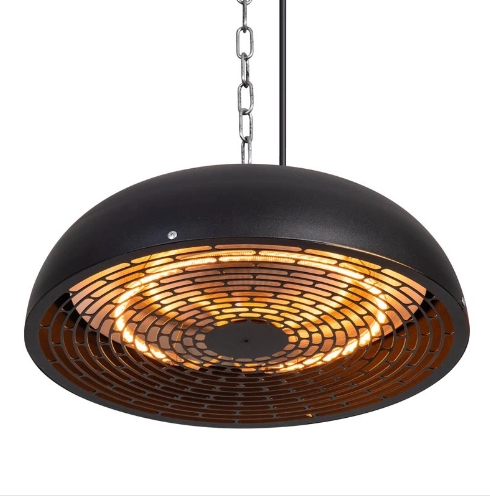
Why Most Outdoor Heaters Die Early (And How We Fixed It)
Let’s be honest: the outdoors is a nightmare for electronics. Between the damp fog, the random rain showers, and salt air if you’re near the coast, your gear is basically fighting a losing battle against rust and shorts. We’ve all seen it. You buy a heater, it works great for one season, and then suddenly it just… stops. Usually, it’s because moisture crept in and fried the internals. That’s why we went with an IP65 rating.
What does IP65 actually mean for you?
In plain English? It means your heater is dust-tight and can handle water jets hitting it from any direction without breaking a sweat. We didn’t just slap a cover on it. We used heavy-duty gaskets and moisture-resistant cable glands to seal the whole chassis. This is huge because of something called thermal shock. Here is the scary part: when a drop of cold water hits a scorching hot infrared element, the glass can crack or the filament can just snap. It happens in a split second. By keeping the inside bone-dry, the heating element stays stable and lasts way longer.
Stopping the “Slow Kill”
Water doesn’t just cause instant crashes; it eats your heater from the inside out. If you’ve ever looked at a cheap heater and seen those crusty, pitted connectors, you’re seeing oxidation. That gunk creates resistance, which leads to voltage drops and—worst of all—dangerous heat buildup at the joints. We decided to fight back. We used corrosion-resistant alloys for the reflectors and coated the terminals in gold or nickel. It keeps the electricity flowing smoothly, even in the humid air.
A few things to keep in mind
Now, there’s a trade-off. Because we sealed the unit so tight to keep the rain out, the air doesn’t move as freely inside the chassis as it would in a wide-open, “leaky” heater. This means heat builds up inside a bit faster. When you’re mounting these,don’t block the vents. Give it some breathing room, otherwise, the thermal cutoff switch might kick in and shut you down right when you’re trying to stay warm. One last tip: please, wire these into a GFCI circuit. Our seals handle the rain, but your electrical panel is what keeps you safe.