



Getting the Heat Right: The Secret to Stress-Relieving Tempered Glass
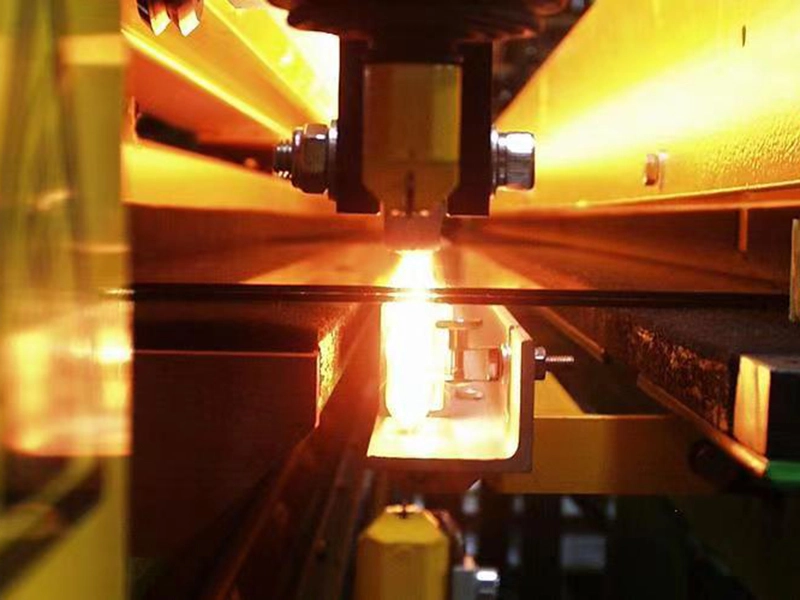
If you’ve ever tried to pull internal stress out of tempered glass, you know that just cranking up the heat isn’t enough. In fact, raw heat can be your enemy. Here’s the thing: you need the infrared (IR) energy to actually “sink in.” If the wavelengths coming off your lamps don’t match the specific chemistry of your glass, the heat just sits on the surface. It’s like trying to warm up a room by painting the walls red—it looks hot, but the core stays cold. That’s how you end up with uneven thermal gradients and, eventually, a lot of shattered glass. Hitting the Sweet Spot Most standard IR lamps throw out a broad, generic curve of energy. But glass isn’t generic. Depending on the additives in your mix, the “absorption peak”—the exact point where the glass actually drinks in the heat—shifts. We handle this by tweaking the filament material and the envelope coating. By aligning the lamp’s output with your glass’s specific chemistry, we make sure the heat penetrates deep into the substrate instead of just bouncing off the surface. Finding the Right Rhythm Setting up these systems is a bit of a balancing act. We look at how thick your glass is and how long it needs to soak. Shortwave setups are aggressive. They hit fast and hard. It’s great for speed, but if you aren’t careful, you can shock the surface. Medium-wave is a bit more mellow and offers a more balanced soak. Then you’ve got your conveyor speed. If you try to cheat the clock by pumping up the wattage to speed up your cycle, you might actually create new stress points. It’s a delicate dance. The Trade-off Now, there is a catch. When we tune a lamp for a specific spectral peak, it becomes a specialist. A lamp dialed in for lead-crystal additives isn’t going to do a great job on standard soda-lime glass. You’re trading that “one-size-fits-all” flexibility for real, targeted depth. Because of that, your glass chemistry needs to stay consistent. If your batches start drifting, that spectral mismatch will creep back in, and you’ll start seeing inconsistent results again.