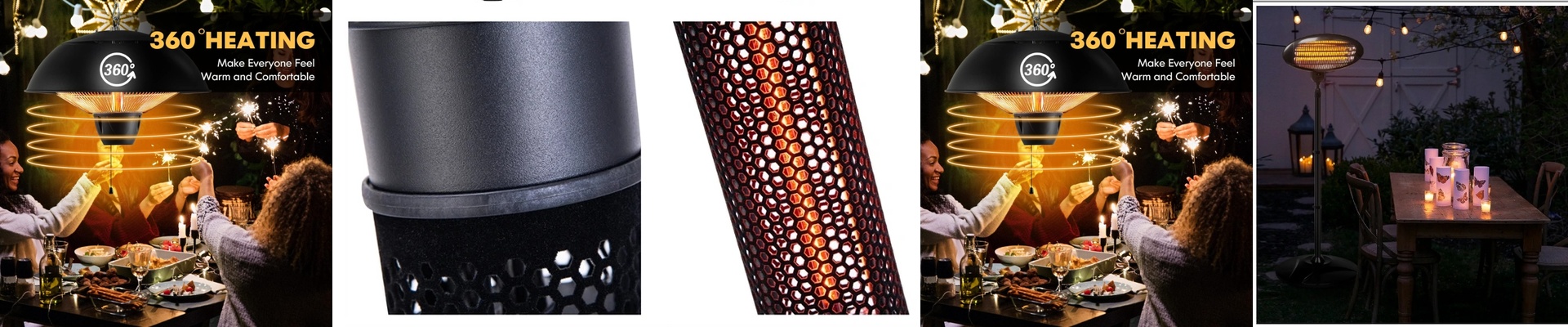
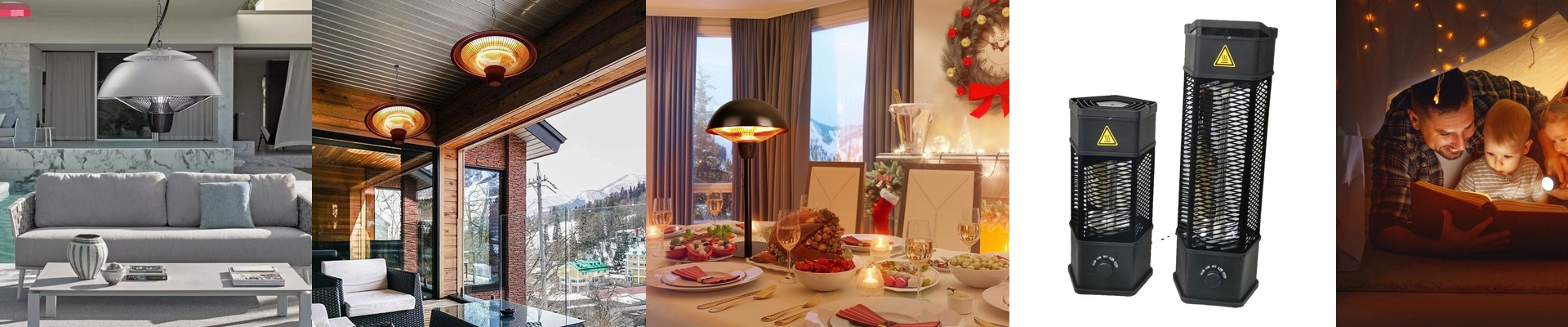
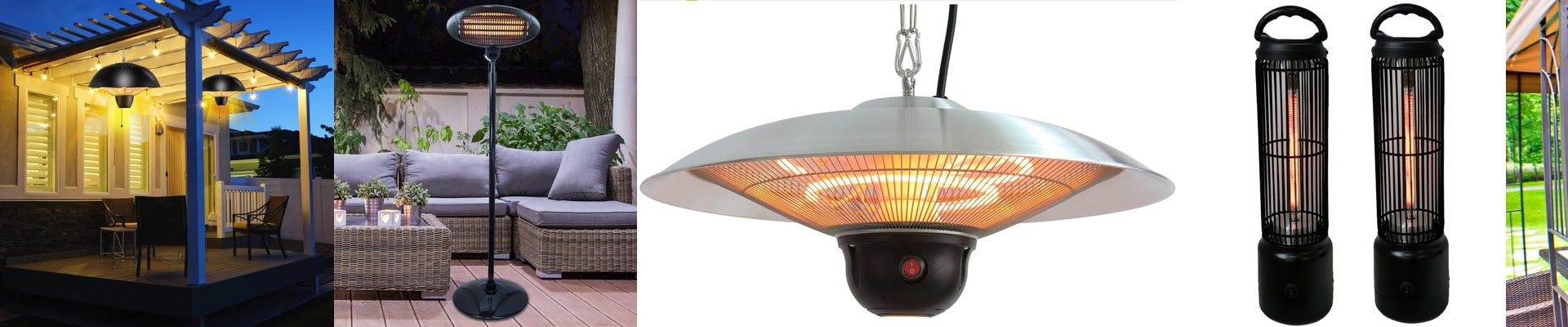
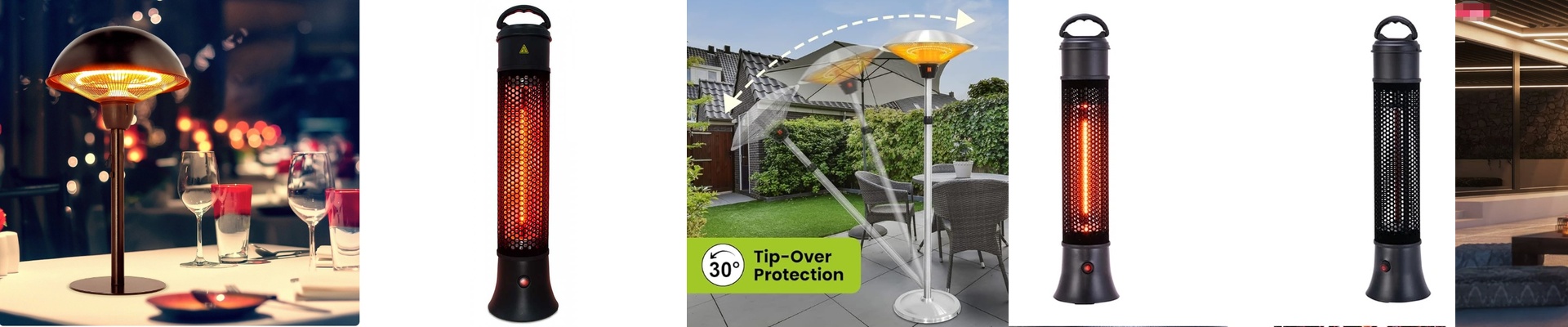
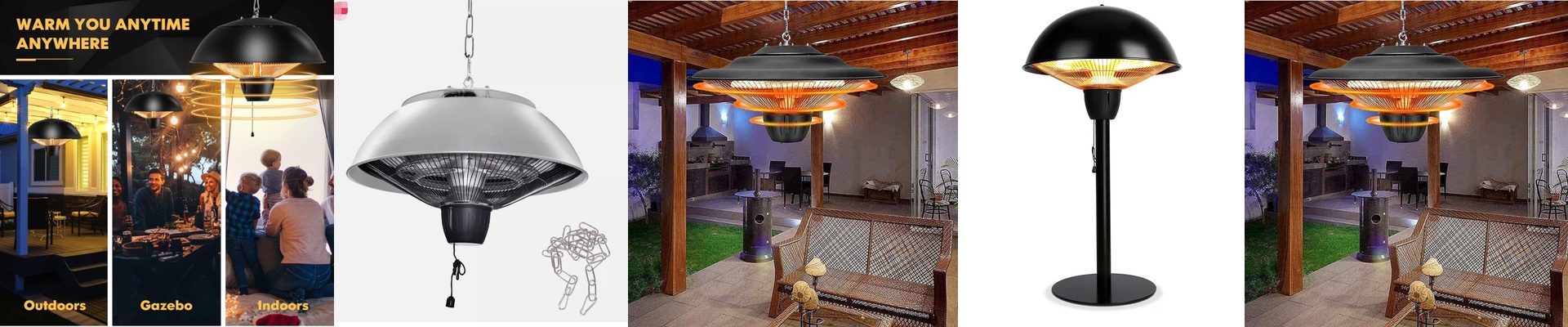
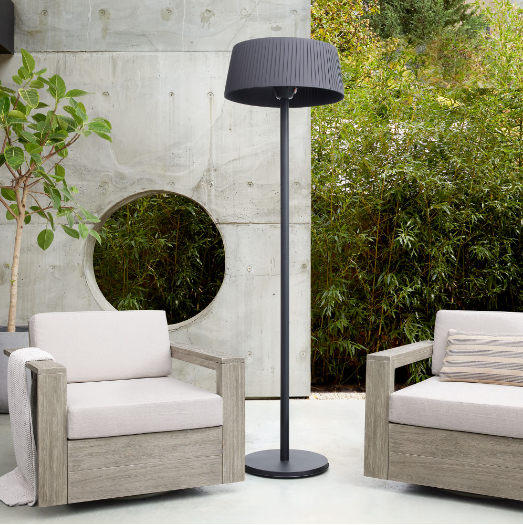
The sun drops behind the roof, and the air gets that bite—the kind that chases you inside. You don’t want to fold up the chairs yet. You want one more conversation, one more quiet hour under the sky. That’s when an electric patio heater earns its keep, making the patio feel like an actual room even when the weather turns damp.
What matters, under the hood
We built this electric patio heater around radiant warmth. An infrared element heats people and objects directly, instead of trying to warm the air. The payoff is immediate comfort—no long wait, no noisy fan fighting a cold breeze. It’s rated waterproof to IP55, so it’s protected against rain and splashes from any direction. The housing is sealed and the materials are corrosion-resistant because, let’s face it, outdoor duty is tough. Plug it into a standard outlet, and you get focused warmth over a patio seating area, with a thermostat to hold the comfort level you want. Safety isn’t an afterthought. Tip-over protection shuts the unit off if it gets knocked, and the exterior stays cool to the touch.
Why this approach fits the patio
Outdoor comfort needs to be instant and dependable. Electric infrared heat comes on fast, warming faces, hands, and legs without turning the table into a wind tunnel. And waterproof construction matters because patios get wet—dew, mist, and those sudden showers. With IP55 protection, you can run the heater through the evening instead of constantly checking the sky. That steady radiant warmth keeps people lingering longer, which can ease stiffness and keep conversation flowing. Because it heats people directly, it can feel more efficient than trying to heat the whole yard.
What you need to keep in mind
This electric patio heater is built for outdoor use, but it still needs space. Keep it at least three feet from combustible materials, and away from curtains or tablecloths. Plug it into a grounded outlet on a circuit that can handle the load. Avoid extension cords, especially when things are damp. The exterior stays cooler than traditional heaters, but the heating element is hot—so position it where guests won’t reach into the beam. For the best coverage, mount it overhead and angle it toward the seating area, not directly at a wall.