


Stop Your Lab Glass from Shattering: Why 0.1°C Actually Matters
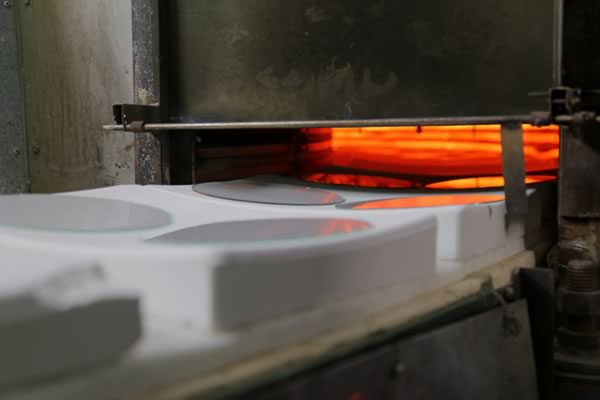
Let’s be honest: there is nothing worse than the sound of a piece of lab glassware shattering. Especially when it happens during sterilization or while you’re under vacuum. Usually, that’s not bad luck. It’s internal stress. When you’re annealing, you aren’t just “heating” the glass. You’re trying to calm down the tension inside the material. If your temperature swings too much, that stress stays locked in. Then, the moment the glass feels a bit of pressure? Crack. To stop that, we use shortwave infrared elements. They hit the exact annealing point and stay there, without that annoying “overshoot” that ruins a good batch. The obsession with 0.1°C Most heating elements act like a pendulum. They swing too high, then drop too low. But in this world, a 2°C mistake is the difference between a perfect vessel and a pile of expensive scrap. We pair IR lamps with high-res PID controllers to keep things within a 0.1°C window. It’s a tight squeeze, but it works. It means the glass moves through its transition temperature uniformly. You end up with a molecular structure that’s consistent from the rim all the way to the bottom. Why IR beats a standard kiln Old-school ovens rely on convection. The problem is that air is just bad at moving heat. IR radiation is different. It hits the glass directly. This is huge because it lets us target the “danger zones”—the neck or the base—where stress loves to hide. Plus, shortwave IR gets through the surface fast. That means the glass spends way less time in that awkward window where it starts to deform. The honest truth about the trade-offs Now, this isn’t magic. If your lamp spacing is off, you’ll get cold spots. It happens. You have to spend the time mapping your thermal footprint and making sure the array is calibrated for the specific thickness of your glass. If you don’t, the heat won’t be even. And here’s the kicker: the cooling phase is just as important as the heating. If you rush the ramp-down, you’ll just put all that stress right back into the glass, making the whole process pointless.